Last week the ‘Encouraging youth participation in Europe’ events took place in Brussels and gathered young multipliers, national and European youth and Civil Society organisations representatives, experts and policymakers to reflect on challenges and facilitators of youth engagement and to take concrete action towards the 2024 EU elections and beyond.
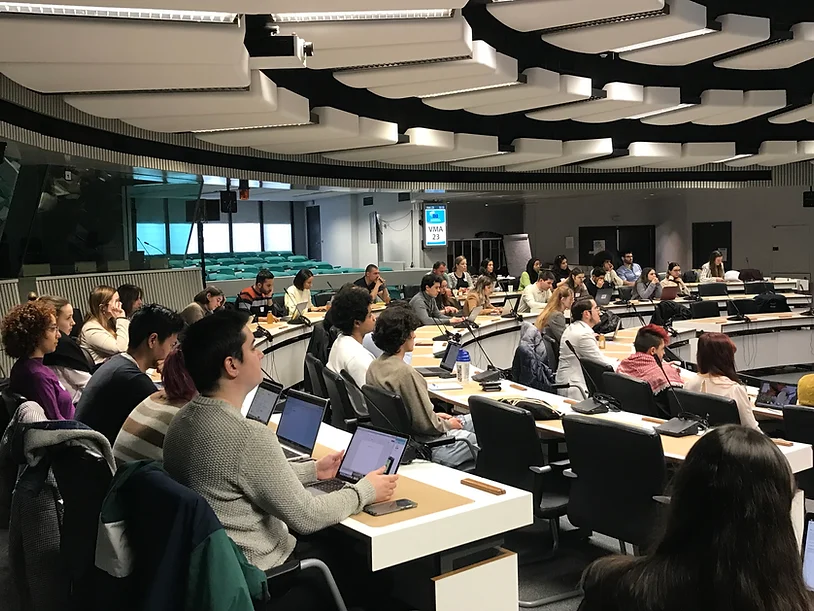
Following a few welcoming words from Caridad Alarcón Sanchéz, Vice-President of Lifelong Learning Platform, Ms Katrīna Leitāne, Member of the Civil Society Organisations (CSOs) Group and President of the Youth Group of the European Economic and Social Committee, where the event took place, gave the opening remarks to kick-off the policy conference on the importance of voting and youth engagement and the role of CSOs in policy making.
The first panel focused on the outputs from the project ‘Co-operation Youth vote: Enabling future active European citizens’, presented by the project partners. The coordinators of the project, JEF Europe, introduced the project and its main objectives and activities, followed by a intervention from OBESSU (Organising Bureau of European School Student Unions) on the published report on the attitudes, challenges and views of youth on the vote for the European Parliament elections 2024. The report showed lack of trust in the system, poor representation and gaps in terms of rights were shown as some of the most common challenges for abstainers on a survey that reached around 2000 Europeans aged 14 to 25 (34% first-time voters). Young Educators presented the project Voting Toolbox, including activities to promote youth engagement as well as materials and resources. JEF sections of Italy, Latvia and Bulgaria explained to the audience the impact on and perspective from young people active on national and local level, both in-person and using video messages.
Is the topic of youth participation addressed enough at a national and/or EU level?
The panel discussion on youth voting and active participation counted on MEP João Albuquerque, Ondřej Bárta from the Pool of European Youth Researchers of the CoE, Gaia Ramon Reis (Board Member from OBESSU) and Mara Grimminger, President of JEF Belgium to share experiences and points of view from different perspectives: policy making, research and two youth perspectives. The discussion, moderated by Chiara Piccolo, Head of European Affairs at the Learning for Well-being Foundation, touched upon crucial issues on youth participation: importance of education; distinction between participation and meaningful participation and co-participatory scenarios where young people’s input is properly considered and used for policy at all levels. Other topics included extending the voting age to 16, which is a reality in only a few Member States, and is happening for the first time this year in Belgium for the European elections, where 16 and 17-year-olds will be allowed to vote, adding 270,000 young people in Belgium to the voting pool. The EU Youth Test, the impact assessment tool which ensures that young people are considered on new EU policy, was considered an important resource, but panellists consider there is still a long way to go to consider youth participation is satisfactorily addressed at EU level. The panellists also stressed the priority to empower young people to vote and help them get informed, but also to actively participate in local NGOs and at political local or regional levels.
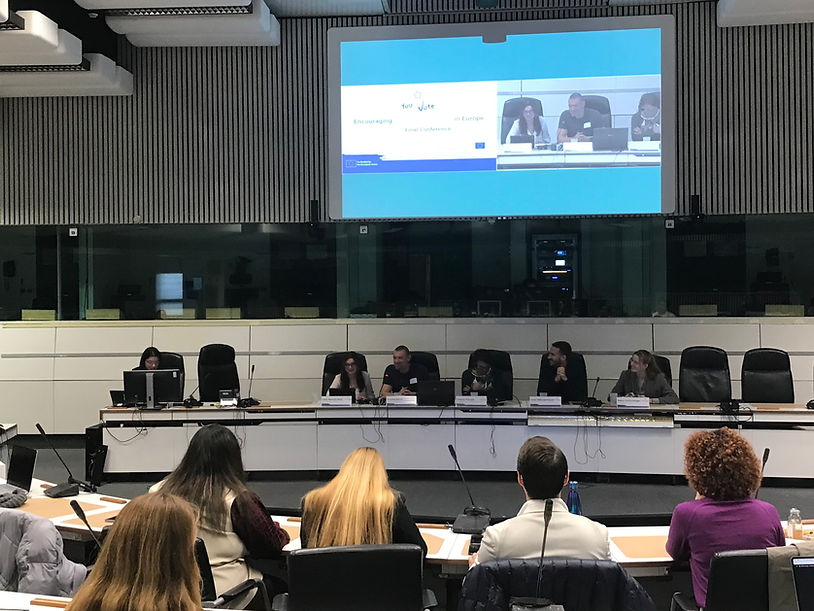
The second day started at the European Parliaments’ Info Hub with the welcoming words from Marta Concepción Mederos, Vice-President of Lifelong Learning Platform, followed by the presentation ‘Democracy in action – Introduction to three communication flagship initiatives of the European Parliament’, including the together.eu website, Youth Hub and the European Elections website.
To offer a space for young people to talk with Members of the Parliament, 5 MEPs were present to join reactions to challenges and views of youth engagement. MEP Alex Agius Saliba, MEP Sara Cerdas, MEP João Albuquerque, MEP Rasmus Andresen and MEP Damian Boeselager reflected on how can first-time voters’ participation in the elections be boosted and on the systemic barriers young people face in their constituencies. MEP Damian Boeselager and MEP João Albuquerque explored the themes of and issues with the Conference on the Future of Europe and the European Years (European Year of Youth in 2022 and current European Years of Skills) and what processes can be put in place to concretely include a youth perspective at EU and national levels beyond simulation exercises. MEP Rasmus Andresen underlined the role of funding if young people are really to be involved in policy making and how this is put at risk when funds such as Erasmus+, CERV and ESC face cuts due to fiscal measures. MEP Alex Agius Saliba stressed the importance of the digital space and its implications on present and future generations and the EU recent advances such as the Digital Services Act. MEP Sara Cerdas delved into mental health and how youth voices and experience have to be considered in such an impactful topic for EU citizens, including young people. A Q&A between MEPs and youth and civil society organisations representatives followed the panel discussion. Overall, there was consensus on supporting more democratic/citizenship education across the EU at all levels and from all sectors of education and training.
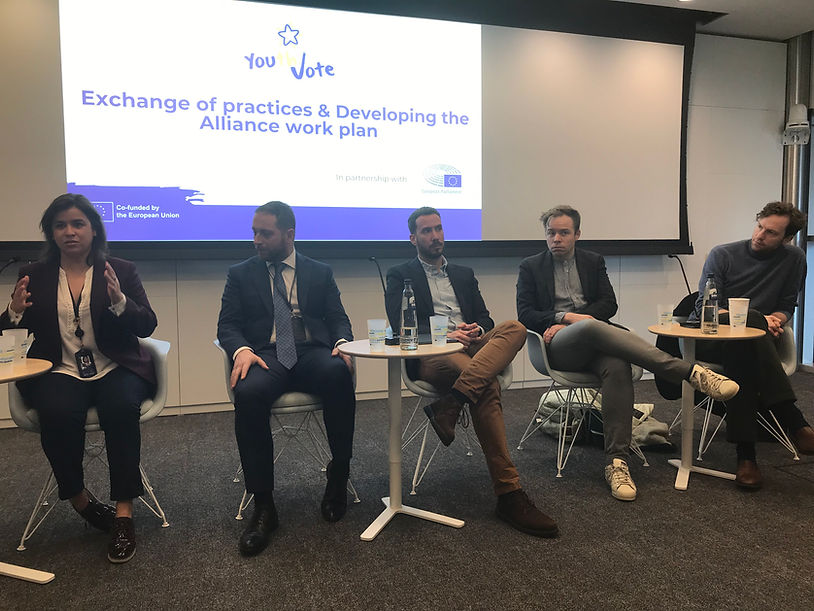
Alliance for Youth Vote kick-off meeting
With over 90 participants, the Alliance for Youth Vote started their work to develop a common action plan for the European Parliament elections 2024 and beyond. This informal alliance will work together with policy makers, local, national and European youth and civil society organisations to encourage youth participation in democratic processes as well as join other existing initiatives promoting the strengthening of European civic education. Participants exchanged practices and experiences on campaigns, events, educational resources and on how to engage young people who don’t have the right to vote and/or come from disadvantaged backgrounds. The Alliance will continue its work, and has planned its next meeting already March 25th!
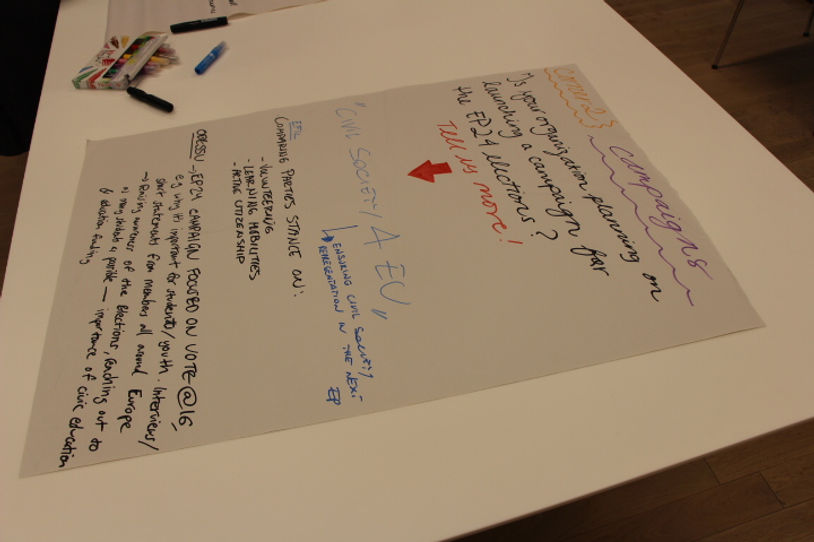
If you’re a representative of a national or European Youth or Civil Society Organisation and are interested in the Alliance, please register here to receive updates and join us in the next meetings!